Cross-Country EV Charging Network Completed Weeks Ahead of Schedule

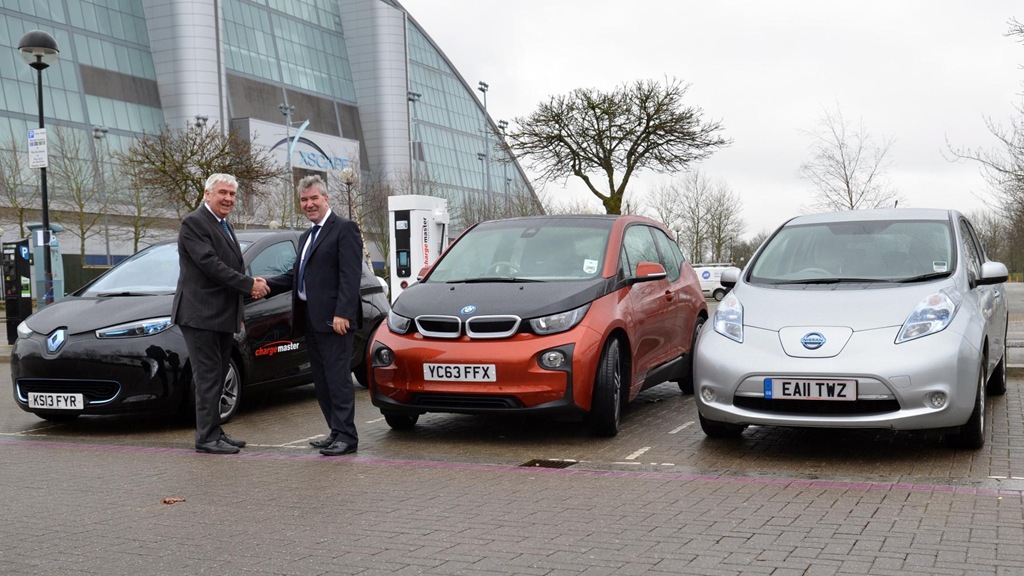
Chargemaster's David Martell with Councillor of Milton Keynes
Chargemaster’s David Martell with Councillor of Milton Keynes, in front of a Renault ZOE and some other EVs

A network of 14 electric vehicle (EV) rapid chargers, forming Milton Keynes CrossLink and supplied and operated by Chargemaster Plc, has been completed four weeks before the planned launch date. The rapid chargers are some of the first ‘tri-standard’ units in the UK and will allow EV drivers to charge their cars in approximately 20 minutes, enabling cross-country motoring through Cambridge, Bedford, Milton Keynes, Buckingham and Oxford.

CrossLink is a Milton Keynes Council initiative and the charging units are sited at strategic locations connecting Cambridge and Bedford in the East with Milton Keynes and Cheltenham, Oxford and Buckingham with Milton Keynes to the South West. The units, supplied by local company, Chargemaster Plc, will provide rapid charging to a whole range of the latest electric vehicles.

The ‘tri-standard’ charging points are designed to work with all the latest electric cars including the new BMW i3 and VW e-up!, the Nissan Leaf, Renault Zoe, Citroen C Zero, Peugeot Ion, Mitsubishi i-MiEV and the Tesla Model S, the first UK models of which arrive next month.

The network of charging points has been partly funded by the Office for Low Emission Vehicles (OLEV) under a government scheme supporting the growth of ultra low emission vehicles and the respective charging network.

Transport Minister Baroness Kramer said:

“These charge points are the first of their kind in England, able to rapidly recharge a wide range of plug-in vehicles. The government is committed to making the UK a leading market for ultra low emission vehicles and putting in place versatile and accessible infrastructure like this is an important part of making this happen.”

Milton Keynes CrossLink is one of the first from this round of OLEV funding to be completed, and is one of a number of key initiatives being implemented by Milton Keynes Council to make the city a low-carbon and emission-free centre. The network, which does not rely on any financial contribution from the rate payer, enables electric vehicle owners and operators to recharge their cars several times faster than conventional chargers and allows easy access to the Milton Keynes regional shopping centre and recreation facilities.

Virtually every car manufacturer is now bringing plug-in cars to market and it is widely expected that by 2020, one in ten cars sold will be electric. This new network of rapid charging stations will help drivers using these cars to make a significant reduction to air pollution and carbon emissions.

Councillor Keith McLean, Milton Keynes Council Cabinet member for Transport said:

“This is excellent news for local electric vehicle drivers and is another vital step to lowering our collective carbon footprint in line with the Council’s low carbon strategy.  We have enjoyed a very constructive relationship with Chargemaster Plc, a local company, for the last four years and we are pleased to be able to extend this partnership.

“The fact that Chargemaster be fully responsible for extending the network each year and for all the operating costs of the units rather than the council means that we can make valuable savings to the council budget. The city will get all the benefits of having a comprehensive network of charging points”.

David Martell, Chief Executive of Chargemaster Plc, added:

“I’m very proud of our installation teams and partners, who have worked tirelessly over the last 6 months to get this project completed and operational ahead of schedule. It has been a pleasure to work with Milton Keynes Council, which has a ‘can do’ attitude and positive approach to helping motorists make the most of their electric vehicles on a day-to-day basis.”

List of CrossLink rapid charger sites:

  • MK Bus Station, Elder Gate, Milton Keynes
  • Avebury Boulevard, Juntion with Lower 12th Street, Milton Keynes
  • Outside Xscape, Avebury Boulevard, Milton Keynes
  • Northfield Drive, Northfield, Milton Keynes
  • Silverstone Circuit Innovation Centre, Silverstone, Northants
  • Silverstone Circuit Wing, Silverstone, Northants
  • Cheltenham Racecourse, Cheltenham, Gloucester
  • W. Ganderton, Swan Garage, 20 Bridge Street, Buckingham MK18 1AF
  • Oxford Belfry Hotel, Milton Common, Thame, Oxfordshire OX9 2JW
  • Elms BMW, 4 Sheepfold Ln, Cambridge CB23 6EF
  • Cambridge Belfry Hotel, Back Ln, Great Cambourne, Cambridge CB23 6BW
  • Elms BMW, Clifton Parc, Caxton Rd, Bedford MK41 0GL

Original source: Chargemaster via TheGreenCarWebsite
Renault “could upgrade owners’ electric vehicles”

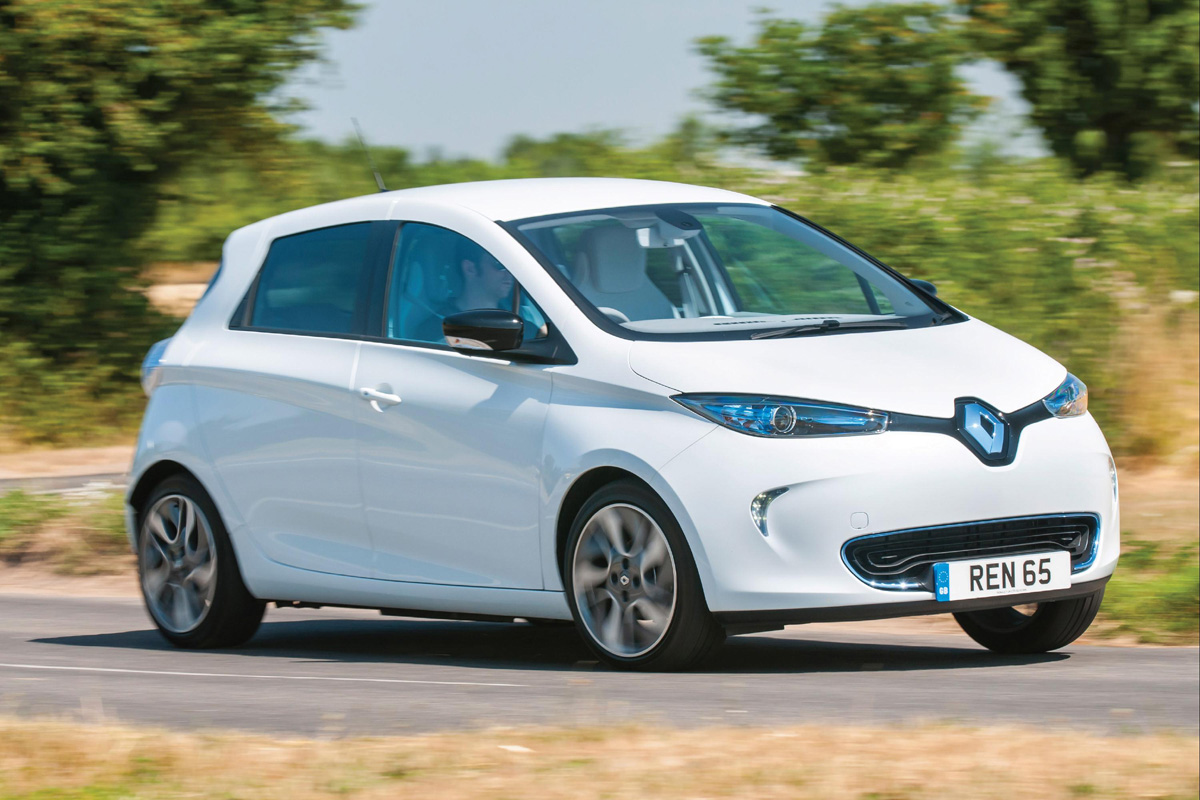
Renault ZOE (Image: Renault)
  •  Batteries could be swapped to boost range
  •  Also requires new control systems
  •  Customer demand and cost are key

Renault could offer upgrades to battery packs on some of its latest electric cars, the company’s EV boss has revealed.

The French manufacturer continues to push ahead with ambitious plans to dominate the electric vehicle market with the Twizy and Zoe, plus the fleet-focused Kangoo EV. However, with new battery technology likely to boost the range of cars within the next 18 months to two years, Renault has factored in the technical ability to swap the batteries and upgrade the control systems of the EVs it has already sold. This process could, in theory, be easier because Renault leases the batteries to owners instead of selling them outright.

The firm’s EV boss Beatrice Foucher told What Car?,

“The technical possibility [to upgrade the batteries] exists. I have asked the engineers to make sure this is the case. It’s not a simple upgrade, because you have increased energy density in the batteries and then the car’s electronics and control systems need to be upgraded to take that into account. However, it’s certainly achievable.

“What is more important is whether the customer demand is there,’
‘It could be that when we get down to the costs involved, buyers decide that they will trade in their 200km-range EV to get an all-new version with a 300km of range. Then we have the other car, which could be suitable for someone who knows they only need 200km – or who wants a cheaper entry point to the technology. There are all sorts of possibilities.”

Foucher does not believe that ‘range anxiety’ will be a problem for long enough to consider introducing a range extender (where a small petrol motor can supply charge to prevent a battery becoming completely depleted) to the line-up. BMW is introducing a range-extender i3 alongside its fully electric version, but Foucher said:

“We see what BMW is doing and it’s interesting, but I don’t think we will do it. Perhaps it makes it easier for people to switch to EVs for a short while, but this situation will pass quite quickly; the answer is greater range on the car and also a better infrastructure for charging, and these things are coming fast.”

Renault – Number One for Electric Vehicle Sales in Europe

ZOE - EVSE cable for occasional use (Image: Renault)
ZOE – EVSE cable for occasional use (Image: Renault)

“Now that many automakers are embarking on electric vehicle programmes, Renault offers a full range of electric cars. With a market share of 37% in Europe, Renault is leading the field in this promising technology for the future of the automotive industry. Sales are increasing worldwide and have even got off to a stronger start than hybrid vehicles did when they were launched in Europe.”

Philippe Klein, Executive Vice President, Product Planning & Programmes


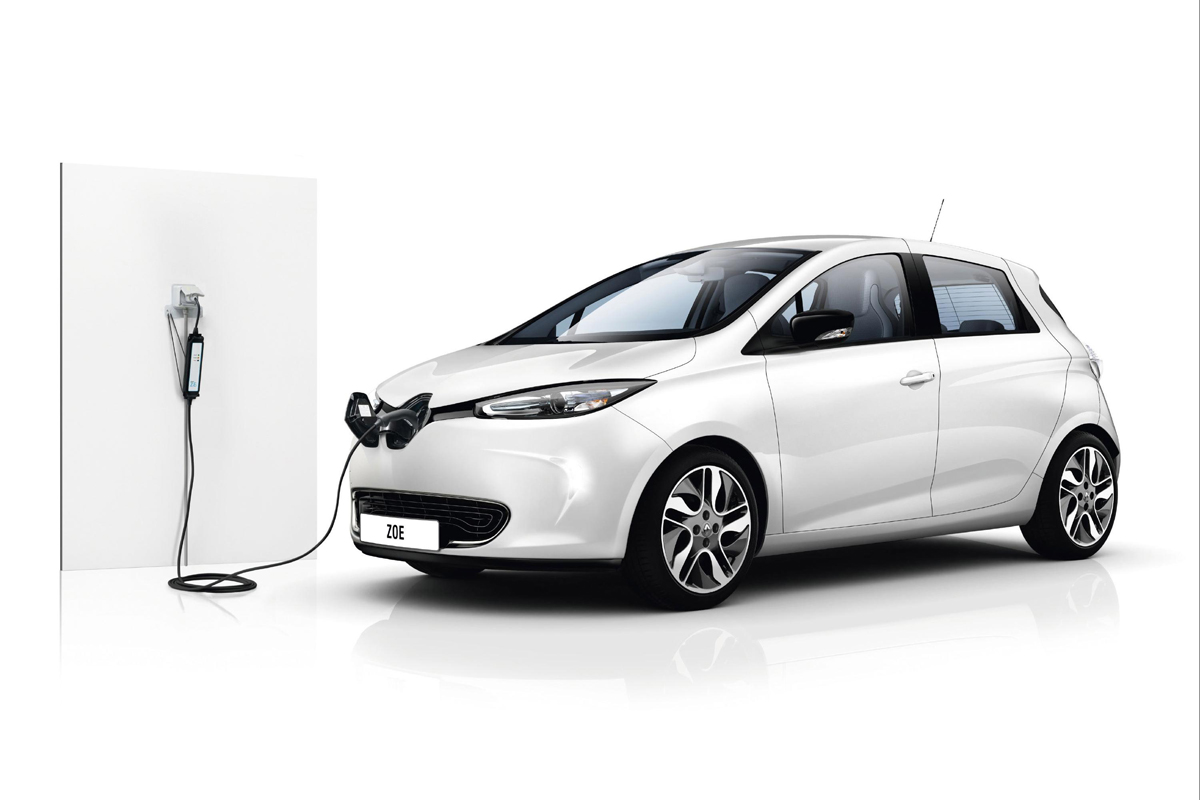
ZOE offers charging ON a domestic plug

At the end of the first quarter of 2014, Renault will start marketing the EVSE cable for occasional use for ZOE, which extends ZOE’s charging options by enabling the vehicle to be charged from a standard household power socket. Initially scheduled for launch in France (March 4), Germany, the Netherlands, Austria and Luxembourg, it will gradually become available across the rest of Europe in the course of 2014.

The EVSE cable for occasional use: a new way of charging ZOE

The EVSE cable for occasional use can be used to plug ZOE into a 230-volt household power socket for top-up charging1.

“Imagine you’re having dinner at some friends’ house and you’re worried you won’t have enough charge to get you home. The Flexi Charger will give you a range of about 18 miles if you plug it into a standard 230-volt socket for three hours,”

says Aurélien Subsol, ZOE product manager.

It  will also be available as an accessory for current ZOE owners.

1 Proper functioning of the EVSE cable for occasional use is only guaranteed if the electrical installation is of a high quality and compliant with standards.


Z.E. Access – a battery lease plan for €45 per month for low-mileage owners

In January 2014, Renault rolled out a battery lease plan designed for ZOE customers who drive around 3,000 miles a year. Available in all the countries where ZOE is marketed and reserved for retail customers buying a new ZOE, the plan is priced from £45 a month with a minimum contract term of 36 months. Mileage is restricted to 750 miles per quarter, which is equivalent to an average daily home-work commute of 12 miles.

Z.E. Access rounds out the Z.E. Flex plan – available since the launch of Renault ZOE – which is priced from £70 a month over three years and includes up to 7,500 miles per year. For customers who do annual mileage of up to 4,200 miles (i.e. 16 miles per day), Z.E. Access is more affordable than Z.E. Flex.


RENAULT ZOE – A RAFT OF INNOVATIONS AND 60 PATENTS TO MAKE ZERO EMISSION* DRIVING AFFORDABLE FOR ALL

Renault ZOE is a readily affordable all-electric city car designed for everyday use. Boasting more than 60 patents filed in the course of its design and development, ZOE features the most advanced electric vehicle technology to promote user friendliness and extend range.

  • Using the Chameleon charger, ZOE is the only electric vehicle that can be charged in between 30 minutes and 10 hours depending on the power available at the socket (between 3 and 43kW) via a single plug on the car. Using a standard 230-volt socket (2.2kW), ZOE can also get a top-up of approximately 16 miles in three hours with the Flexi Charger.
  • ZOE has a best-in-class range of up to around 93 miles depending on driving style and weather. It is also the first mass-market electric vehicle to achieve an NEDC** range of 130 miles thanks to its Range OptimiZEr system, which improves range whatever the conditions.

Safety is also a core focus. According to the independent European safety assessor Euro NCAP, ZOE was the best supermini in its class in 2013, ahead of its internal combustion-engined rivals.

To date, more than 10,000 customers have been won over by Renault’s 100% electric hatchback.

* During road use, excluding wear parts.

** New European Driving Cycle. Standard driving cycle used by type approval authorities to assess the fuel economy and range of passenger cars. NEDC range data is indicative and provides a base for comparison between vehicles.


TWIZY CARGO – OFFICIAL PREVIEW

The LCV variant of Twizy, dubbed Twizy Cargo, is being officially unveiled at the 2014 Geneva Motor Show. The result of a partnership between Renault Tech and Renault Sport Technologies, Twizy Cargo boasts a watertight boot with a capacity of 180 litres (payload: 75kg), accessible via a lockable rear door that opens to 90 degrees. This conversion was made possible by adapting the cut-out of the rear end and doing away with the passenger seat. The front seat is still adjustable.


98% OF ZOE CUSTOMERS REPORT THAT THEY ARE “SATISFIED”

Some 38,000 electric vehicles from the Z.E. range have been registered in Europe over the period between the commercial release of Kangoo Z.E. on November 28, 2011, and ZOE’s first anniversary, celebrated at the Château de Versailles in France on January 27, 2014, with 50 owners and media representatives in attendance.

According to a survey conducted among the first ZOE buyers by IPSOS Loyalty, 98% of ZOE owners said they were satisfied and 95% would recommend the car to family and friends. ZOE’s quiet operation, driving enjoyment and design were the top reasons for satisfaction. Kangoo Z.E. also scored very highly in another survey – 95% of customers were satisfied with their vehicle (Source: survey conducted by Maxiphone in 2012).


Renault electric vehicles conquering the world

Z.E. vehicles popular in car-sharing programmes in Europe

In the UK, e-Car club have now launched their second phase of their car-sharing business.  Their fleet of vehicles on the University of Hertfordshire campus allows students and staff access to a range of Renault Z.E. vehicles for a very low fee – making their daily lives easier and less expensive.

In Switzerland, Mobility Carsharing bought 19 Renault ZOE superminis at the end of 2013 to extend its range of electric vehicles. The company now boasts one of the largest electric vehicle fleets in Switzerland. More than 105,000 customers can now car-share a ZOE thanks to Mobility Carsharing.

In Germany, Cambio-Carsharing and Hamburg’s Sparda bank have introduced an innovative car-sharing programme as part of a small property development project. Two electric vehicles, including a Renault ZOE, have been available for car-sharing since late 2013 by the 14 tenants of a recently renovated apartment block in Hamburg.

In Italy, two car-sharing services using Renault electric vehicles have started up in Naples:

  • Bee-Green Mobility Sharing has a fleet of 40 Twizys to meet the needs of local residents and tourists alike. The vehicles can be reserved by phone or on the web and then picked up from one of the 35 Bee Points located in the city’s car parks. They can then be dropped off at any other Bee Point.
  • Ci.Ro (City Roaming), set up by the non-profit organisation Napoli Città Intelligente, provides individuals or business users with eight ZOEs, three Kangoo Z.E.s and a Fluence Z.E.

In France, 11 Novotel hotels have made Twizys available free of charge to guests who stay for more than four consecutive nights. Featuring ultra-compact dimensions and open bodywork, Twizy is ideal for city driving. In Lyon, the Bluely car-sharing programme, funded by the Bolloré group, will include 50 Twizys. Production of the vehicles has just started. This car-sharing programme is the Bolloré group’s second, following on from Autolib’ in the Paris region. The Lyon service provides electric vehicles other than Bolloré’s Bluecar. Renault is offering its Z.E. retail customers a free annual subscription covering the 4,200 Autolib’ bays until February 28, 2014. Customers are then billed €1 per hour for using the service, which also includes parking. Parking is free for electric vehicles in Paris.

Electric vehicles are perfect for a broad spectrum of business uses, including home deliveries and car rentals for tourists. Following in the footsteps of the French postal service, which ordered 10,000 Kangoo Z.E.s due to be delivered in stages up until the end of 2015, the Austrian postal service has just signed a contract to buy 40 Kangoo Z.E.s.

In England, Eco Travel Network rents out seven Twizys to residents, tourists and businesses so they can explore the local countryside in the Brecon Beacons. Winner of the Green Transport Prize, they have also purchased a Kangoo Z.E. to round out their fleet.  Visitors to the New Forest national park have also been delighted by the ability to hire Twizys from New Forest Environmental to explore the local area, enjoying the peace and quiet from a new perspective.


Renault electric vehicles win followers outside Europe

To date, the Renault Z.E. range – in part or in full – is marketed in 23 countries around the world. In early 2014, electric vehicles went on sale outside Europe, in Turkey, Morocco, Brazil and the United Arab Emirates.

The Pain of Public Charging 7

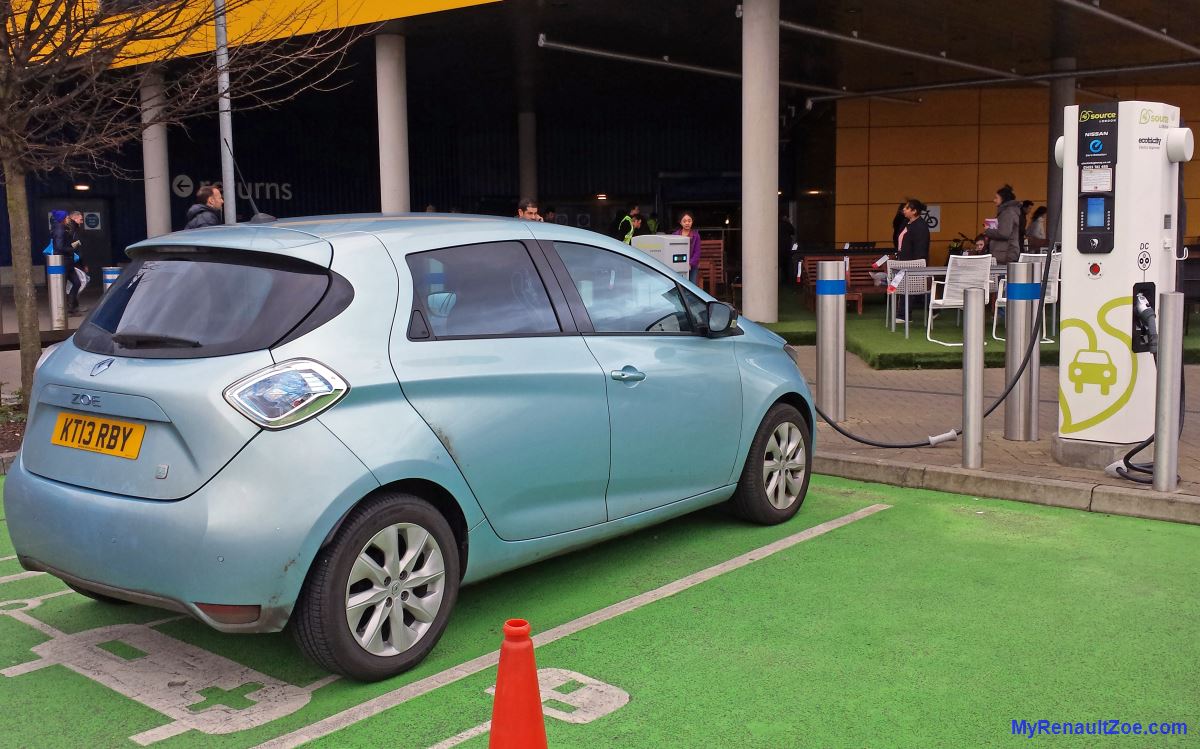
ZOE Charging at IKEA Wembley (Image: T. Larkum)

After our recent good experience of public charging on the way to Surrey (see The Joy of Public Charging) I had almost forgotten our previous troubles. I expected to be able to repeat the journey with the minimum of inconvenience or worry – but it was not to be. I had been lulled into a false sense of security, as evidenced when we headed out the week before last. When we got to Toddington Services on the M1 and plugged in, the charger wouldn’t validate my access card.

At this point I realised I had made the fatal mistake of not checking online the status of the various chargers on our planned route. I rang the Ecotricity Electric Highway support number and the conversation went something like this:

  • “I can’t get the Toddington southbound charger to work.”

  • “That’s right, it’s offline. So is the northbound one. An Engineer is booked to visit next week. You could try the Newport Pagnell chargers.”

  • “They’re north of here and I’m going south. What about the M1 London Gateway services?”

  • “Offline.”

  • “How about the M4 Heston Services?”

  • “Offline westbound, working eastbound.”

  • “I’d be heading west. Where else can you suggest?”

  • “South Mimms is working.”

  • “That’s not on my route – any other ideas?”

  • “IKEA Wembley is working.”

So we got back in the car and headed to IKEA. To cut a long story short I drove in Eco mode and at about 58 mph and arrived there low on charge, but not worryingly so. The outlook improved as we found it unused. In fact there were cones across the parking spaces which I took to be there just to discourage ICE drivers so we moved them and plugged in. Everything worked fine and it charged up while we went shopping and eating in IKEA.

After visiting the family we drove back via the M4 – this way we were heading westbound and so were able to use the working charger. Knowing we had a charge point waiting for us at home I just set the cruise control to 60 mph and headed north. As the predicted range gradually overtook the predicted distance I adjusted the set speed upwards until we were doing 70 as we approached Northampton. We arrived home with about 5 miles to spare.

Next time I’ll make sure I check on the status of charge points before leaving home!

Renault Group, number one in Europe for low CO2 emissions

Renault ZOE and Clio (Image: Renault)

Renault Group has become the European leader in terms of low CO2 emissions and the first automotive group to be under 115g/km of CO2, based upon its sales of passenger cars over the full year 2013. This ranking is the fruit of the rejuvenation of its range, the success of its Energy range of engines and its electric vehicle sales.

Renault Group has moved into pole position in Europe in terms of low CO2 emissions, with an average of 114.7g/km of CO2* per vehicle (source: AAA-DATA**) based on its passenger car sales over the full year 2013.

Renault Group owes this performance to the recent rejuvenation of its ranges, notably including five models that return less than 100g/km CO2 (Twingo, New Clio, Captur, Mégane and Dacia Sandero). Indeed, in the small five-seater diesel car sector, New Clio Energy dCi 90 eco² is the class leader with 83g/km. Overall, the New Renault Clio range emits 18.5g/km of CO2 less than the model’s previous generation.

Meanwhile, RENAULT electric vehicle sales have also contributed significantly to the Group’s low average CO2 emissions.

Taken as a whole, the average level of CO2 emissions per kilometre across Renault Group’s entire range has improved by nearly 11g in 2013 over 2012, falling from 125.5g/km to 114.7g/km.

“This position of market leader is proof that the combination of our powertrain strategy – with our range of Energy engines – and our electric vehicle strategy is bearing fruit. Thanks to these innovations, Renault Group is achieving tangible results and maintaining its objective to significantly reduce the long-term environmental footprint of its activities. At the same time, these improvements are beneficial for both the planet and our customers.”

(Jean-Philippe HERMINE, Director, Renault Group, Environmental Plan)


* The average homologated NEDC combined-cycle CO2 emissions of Renault Group passenger cars registered during the first half of 2013 across 23 EU nations (all countries except Cyprus, Malta, Romania and Bulgaria).

** Figures obtained from AAA-DATA (Association Auxiliaire de l’Automobile), a subsidiary of CCFA. AAA-DATA is an organisation that collates automotive industry data for authorities.