Travelling Internationally with the ZOE – Part 3

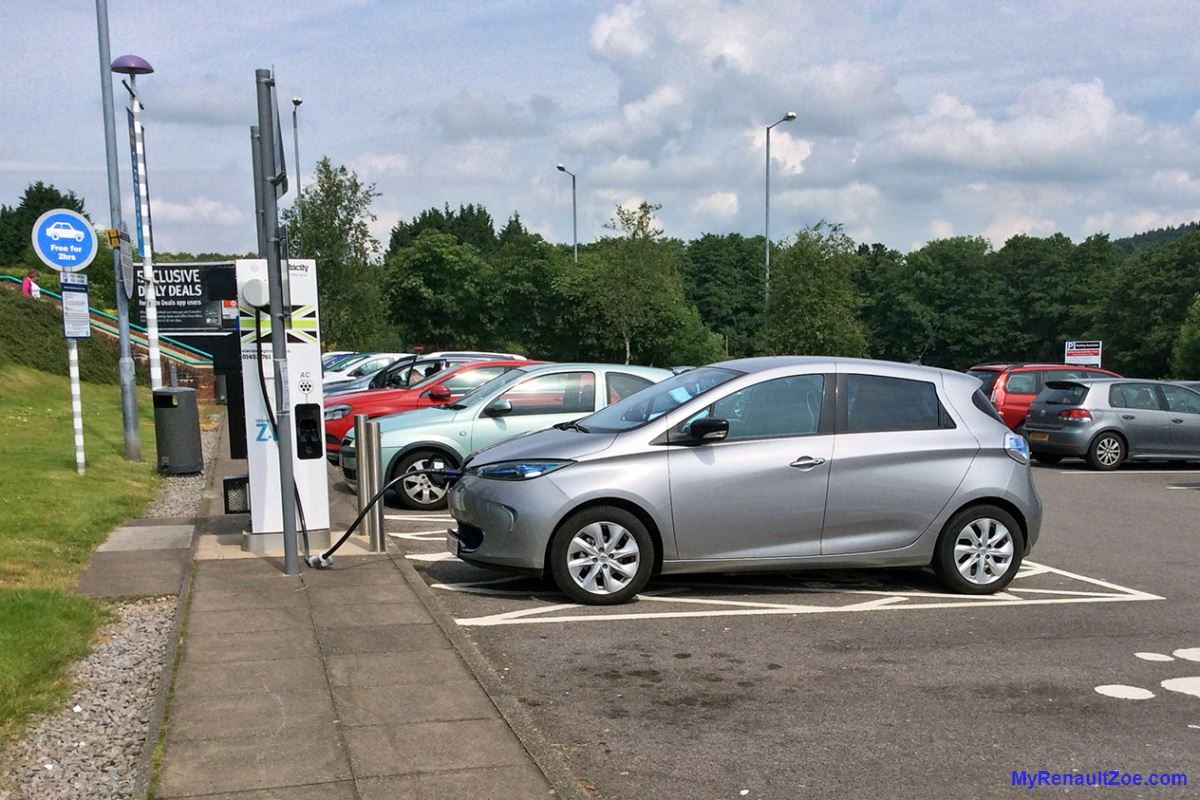
Charging at Pntyclun (Image: Surya)

[Part 2]

The next day we made our way to Ross-on-Wye where we had some activities planned. The closest charger is the Gloucester one which was indicated as being down. So we were really hoping to charge at the campsite otherwise our mobility would be severely limited as we only had a small amount of range left apart from what we needed to get back to an Ecotricity charger. Luckily the campsite gave us an adapter cord to connect to the 16A RV outlets they have on each pitch. Charging there overnight worked as expected: slow and steady. Charging about half the battery took an estimated 8 hours 40, according to the car. I don’t know if it actually took that long, but by the time we got up, the car was full again. Using the granny cable, the whining noise the car makes while charging is significantly less loud, which was good since the car was right next to our tent.
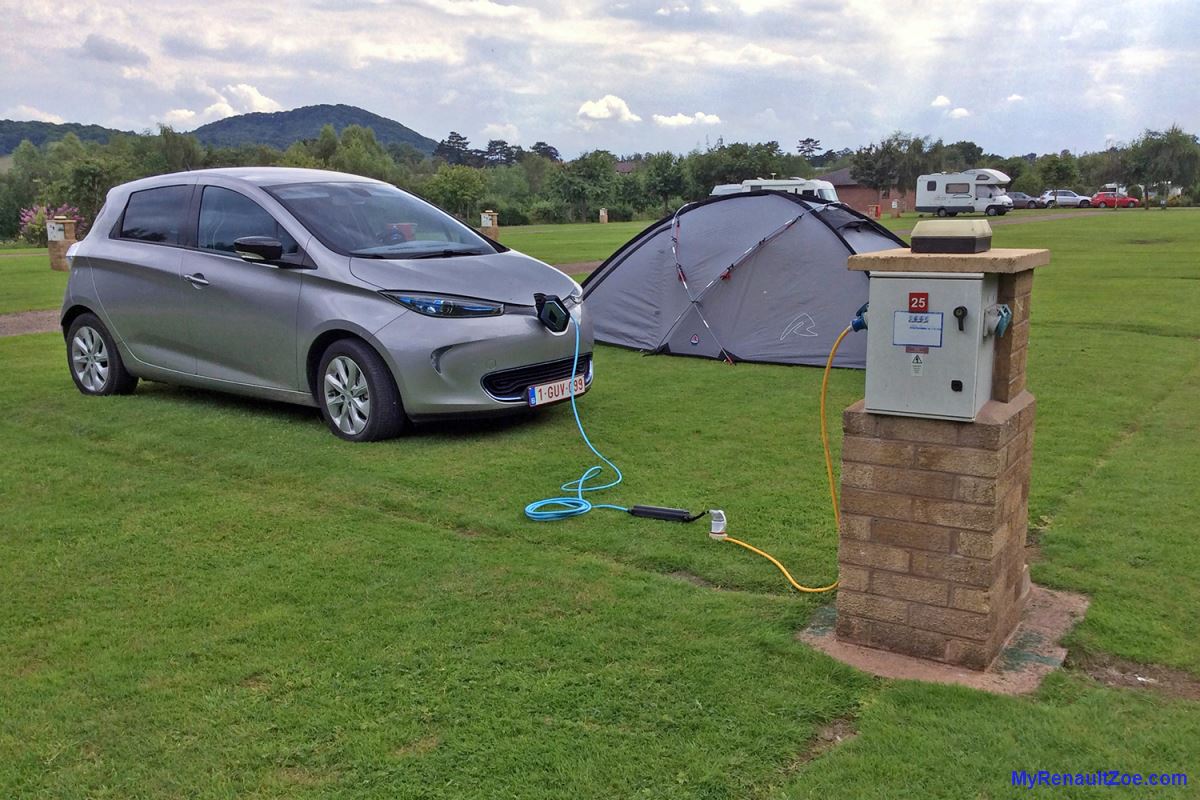
Ross-on-Wye campsite (Image: Surya)

After visiting some friends, playing some board games, having some excellent Indian curries and mountain biking in the Forest of Dean (highly recommended!) we started making our way to Milton Keynes. On our way to the Cherwell Valley charger, we passed a Leaf in the Cotswolds. This was the first Leaf we found that was not either parked or charging.

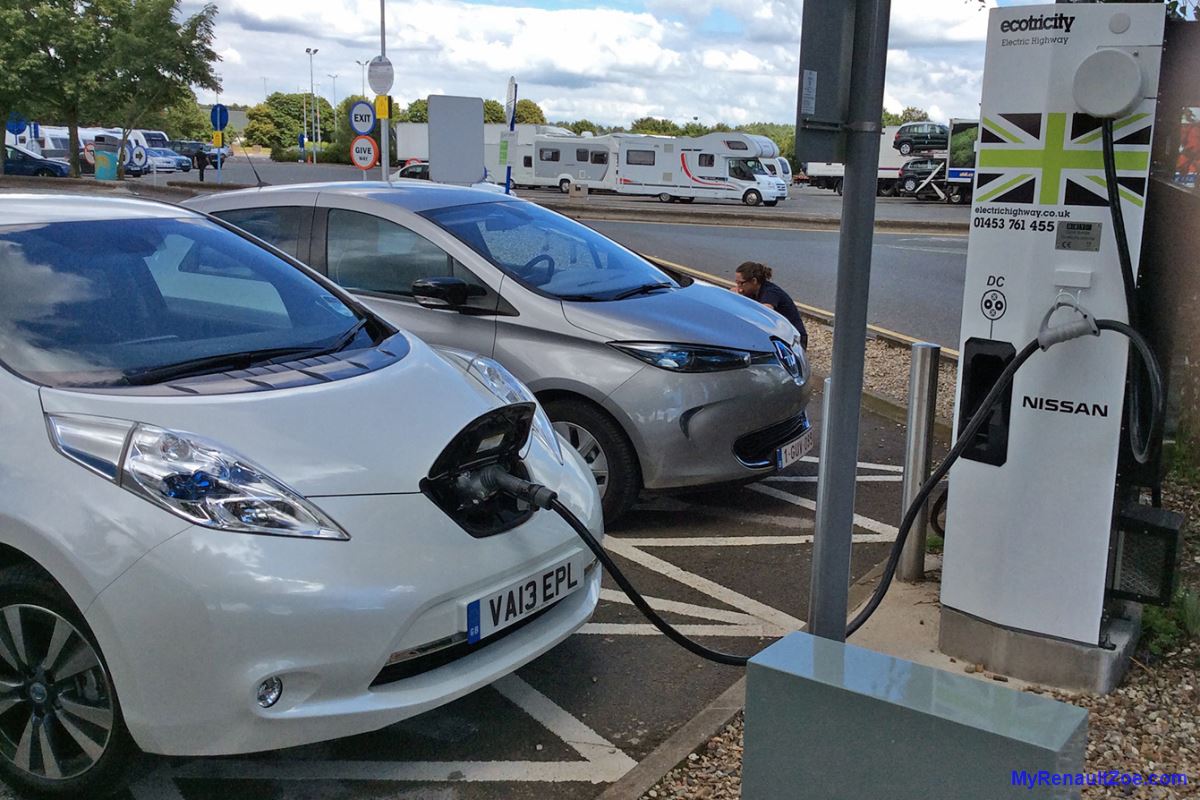
Charging at Peartree, near Oxford (Image: Surya)

Arriving at the charger it had an ‘AC Circuit Breaker’ error. Apparently the charger had gone down minutes after I checked the website. So we made our way down to Oxford. It was just 20km extra, and we still had 57km of range left after driving 110km – proof that 100 miles on a charge is perfectly possible as long as you don’t do motorway speeds.
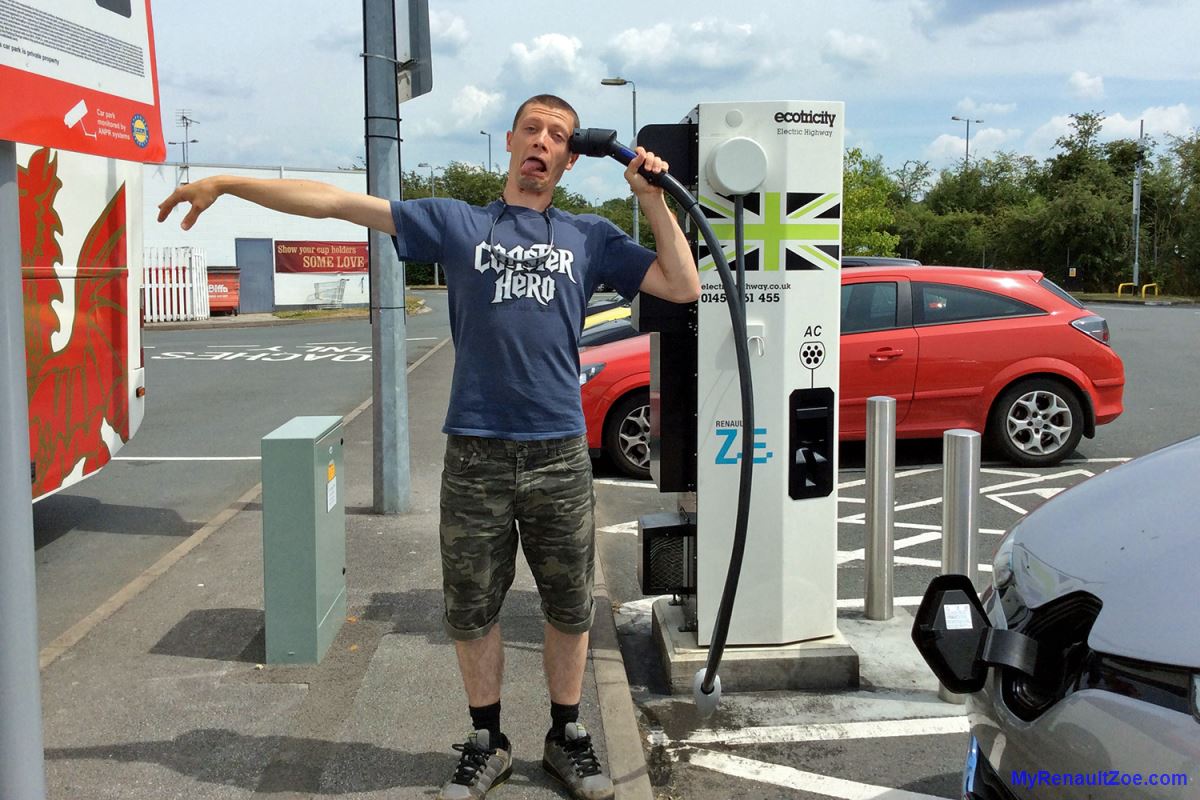
Beware of over charging (Image: Surya)

The Oxford charger worked fine just as Ecotricity had assured me it would be on the phone. We went to Milton Keynes to visit another friend, a guy called Trevor who drives a ZOE himself. We talked about EVs, the ZOE in particular of course and compared the cars we have. That RHD glove box is really pathetic, I feel sorry for the ZOE drivers in RHD countries. The one in the LHD version is of regular size. Not huge but useable. We also discussed the black piece of carpet Trevor had custom made for the dashboard. We checked if just mirroring it would work for LHD models (it does) and how it could be improved.
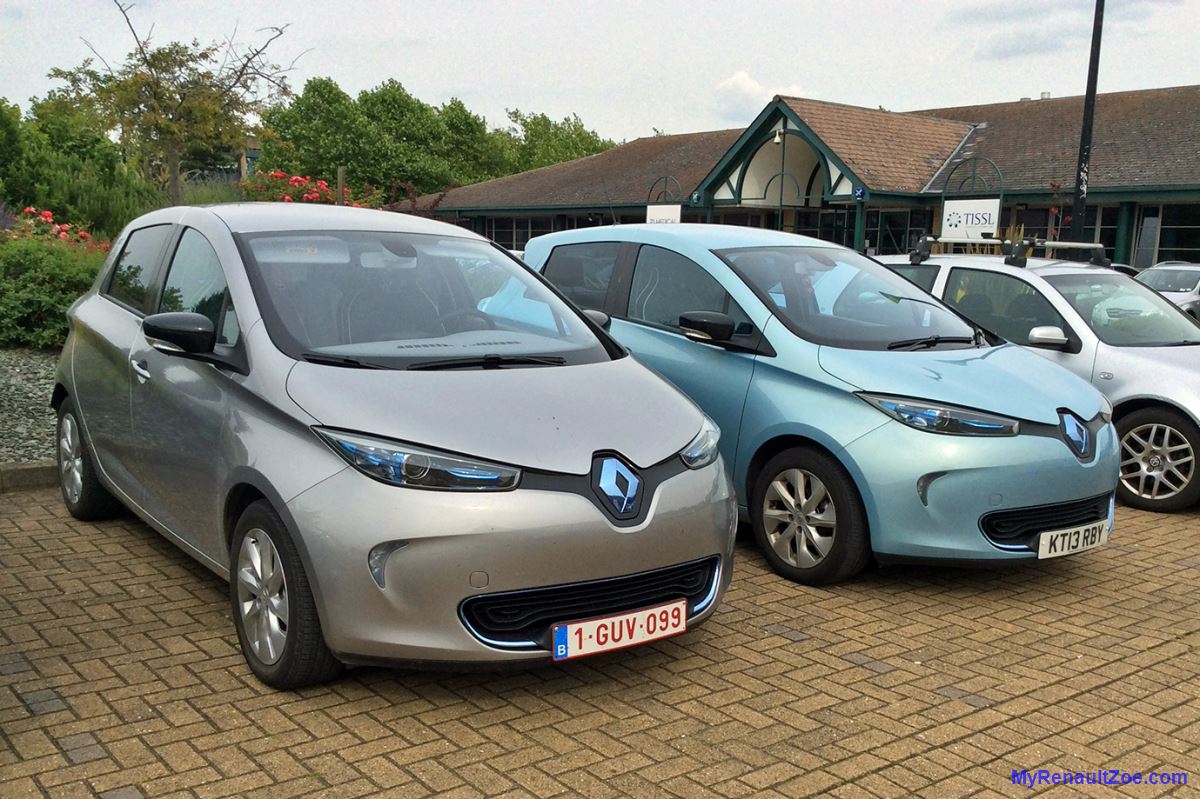
Which colour is nicer? (Image: Surya)

After our visit to Trevor we went to the shopping mall. We found a lot of Polar network chargers there, most of them ICEd. Not nice. Fortunately we weren’t relying on them and didn’t need them.

[Part 4]

Travelling Internationally With the ZOE – Part 2

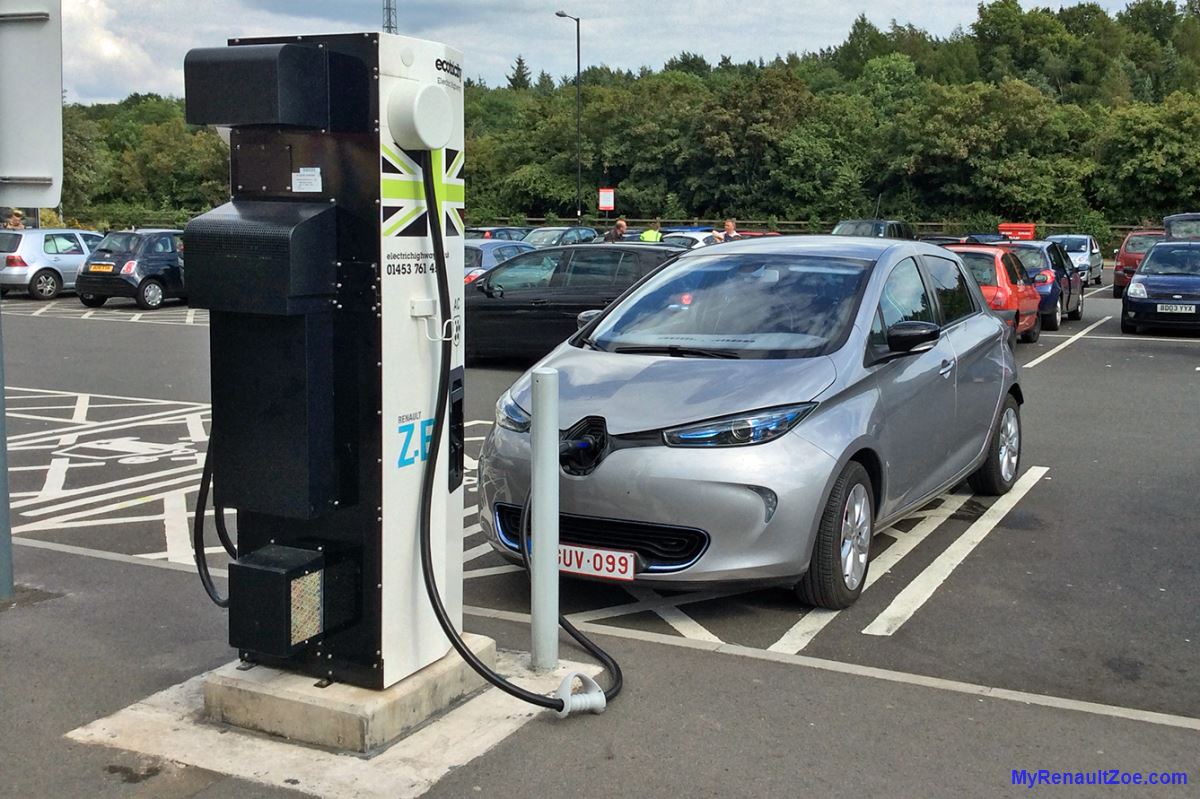
Cobham Services - first Nissan Leaf (Image: Surya)
Cobham Services – first Nissan Leaf (Image: Surya)

[Part 1]

The next day we went off to the charger at the Cobham services on the M25. Upon arriving we found a Leaf charging, but there was a second unit which seemed to work. Except that it didn’t. I could choose to charge and swipe my card, but than an error occurred. I called Ecotricity and they told me it was a new installation and that it wasn’t properly online yet, and that it shouldn’t work at all.

Chieveley Services, Hermitage - second Leaf (Image: Surya)
Chieveley Services, Hermitage – second Leaf (Image: Surya)

So we waited about 10 minutes until the Leaf was done charging to fill up ourselves. The owners of the Leaf where very pleasant to talk to. Upon seeing we where from Belgium, they asked how the car was holding up and such, and they told us they where hoping to make a trip to France in their Leaf. I asked if they had looked into the charging infrastructure. They hadn’t but were aware that it could be a challenge.

Leigh Delamere Services (Image: Surya)
Charging at Leigh Delamere Services (Image: Surya)

As we made our way towards Bristol, we started skipping chargers. The range of the car is more than enough to do that as chargers are about 50km apart. They seemed reliable enough and there is little point in making a stop at every single one unless you love service stations.

Michaelwood Services (Image: Surya)
Charging at Michaelwood Services (Image: Surya)

Along the way we also encountered a second Leaf that was charging. The owners had just picked up their second-hand Leaf hours before and it was their very first charge. We had a really nice chat and they where really looking forward to driving electric from then on. They did have quite a trip ahead as the dealer was far from home.

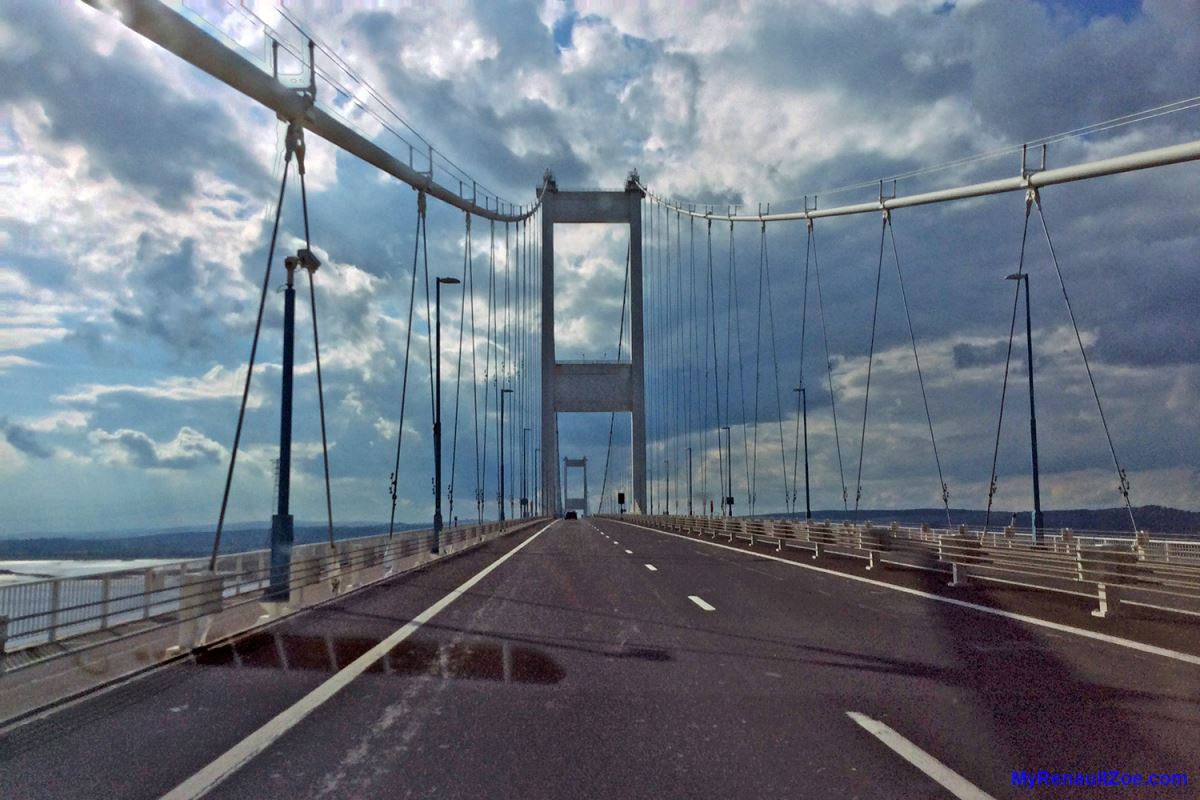
Crossing the Severn Bridge into Wales (Image: Surya)

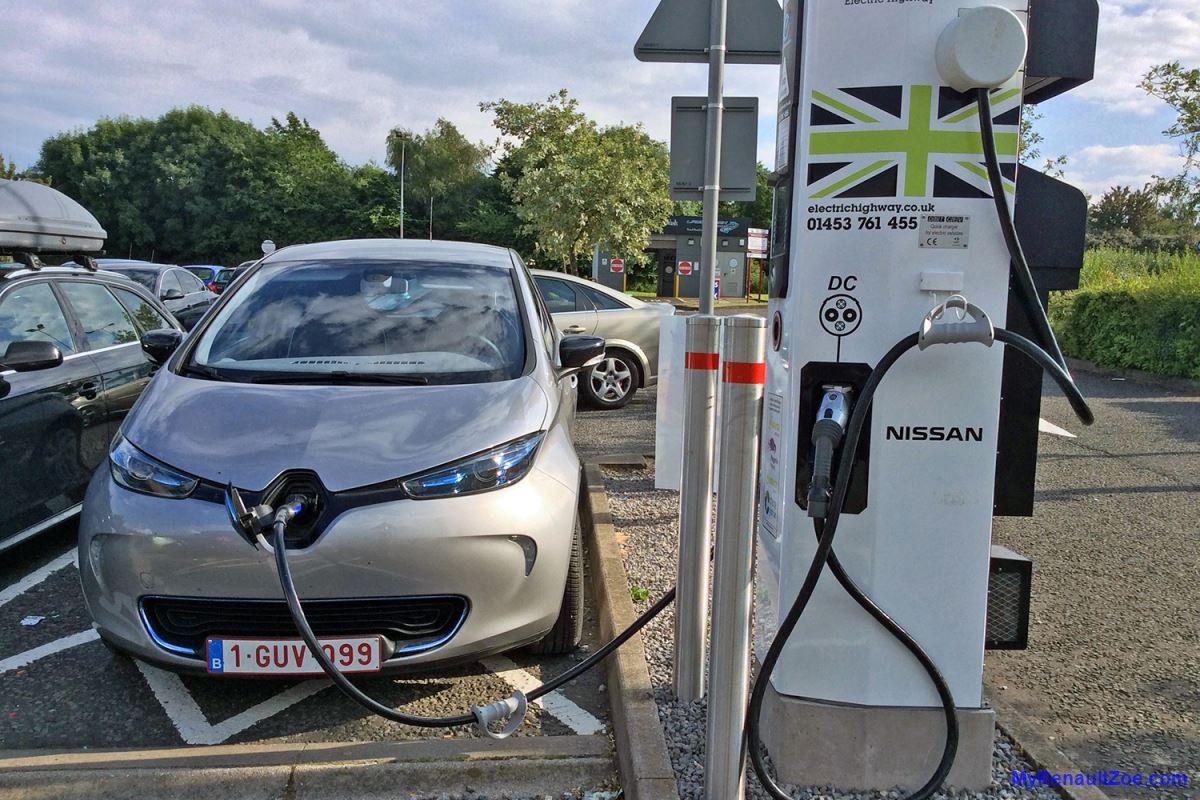
Our last stop of the day was at the Caldicot charger before making our way North towards a camp site. The camp site had no amenities so charging there was not an option.

Final charge of the day at Caldicot (Image: Surya)

[Part 3]

Renault ZOE electric wall-box deal stays fully charged

Renault ZOE electric wall-box deal stays fully charged (Image: Renault)

Renault was the first manufacturer to offer a free domestic charging point with a new fully-electric car, and it looks like it could be the last.

The French brand, currently celebrating a 60% year-on-year increase in sales, has moved quickly to reassure all new ZOE supermini owners that its free wall-box promotion, worth over £200, still stands, despite changing offers in the rest of the market.

Already the undisputed leader in European electric vehicle sales, Renault is also offering ZOE customers an ice-cream melting £2,750 deposit contribution* on all new purchases as part of the recently launched Renault Summer Season.

Combined with the Government’s still-live plug in grant it means there has never been a better time to own the stylish 100% electric compact – available from just £174 per month** including £45 per month mandatory battery hire.

‘Drive the change’

Renault’s flagship plug-in, which has been turning heads on the UK’s streets since last June, is one of the UK’s most affordable electric cars – starting at a recommended retail price of £13,995 (after UK Government’s Plugged in Car Grant) but costing less than 2p per mile to run.

It boasts the longest NEDC range of any mainstream electric car at 130 miles, and its five star EuroNCAP score ranked it the safest supermini last year.

Unlike some rivals who require users to shell out on a charging solution, Renault is still including a 7kW wall-box, which charges ZOE from zero to 100% in three to four hours, for free at domestic properties in the UK – worth £214.

Add all of these savings up and a typical ZOE buyer could be thousands of pounds better off, even before taking into account the associated Benefit-in-Kind, road tax and congestion charge benefits of running an electric vehicle.

British Gas will install a 32 amp (7kW) ZE ready single wall-box with all new purchases, and have it fully operational ready for owners to charge their eagerly-awaited pure electric ZOE at home for the first time.

Renault believes that around 90% of charging will take place at home, with ZOE’s battery able to be charged from completely flat to fully charged in just three and a half hours, while ZOE can also be fast charged to 80% of its capacity in just 30 minutes using public rapid-charger 43kW power sources, of which there are already over 150 around the country.

The single wall-box can be installed at any UK residential address with an O2 data signal, and has an attached lead, meaning that drivers don’t have to delve into the boot at night to find the cable to plug in. The cable is 4.5 metres long, ensuring that even customers with off-street parking will be able to charge their ZOE easily.

‘Peace-of-mind’

Making the switch to electric motoring does not have to be complicated. In fact, one of the greatest benefits of choosing a ZOE is peace-of-mind. The battery hire contract includes a battery performance guarantee, whereby if, for any reason, its operation falls below 75% of its original capacity, it will simply be repaired or replaced, regardless of the vehicle’s age or mileage.

In the unlikely event that a customer runs out of charge, cover is also included to take them to a chargepoint. Renault has a national network of EV-ready dealerships, every one of which has charging solutions, and the national network of charging points is growing by the day. For full details, see www.renault.co.uk/chargemap.

For lower mileage retail customers, a battery hire deal on all new ZOE orders starts from only £45 per month**. When taken over a three-year term, based on 3,000 miles per year, it offers a real cost-effective alternative tailored to those doing shorter journeys on a regular basis.

After all this, customers will all still benefit from the comprehensive Renault 4+ package, worth over £1,000, which includes 4 years/100,000 miles warranty and roadside assistance.

Travelling Internationally With the ZOE – Part 1

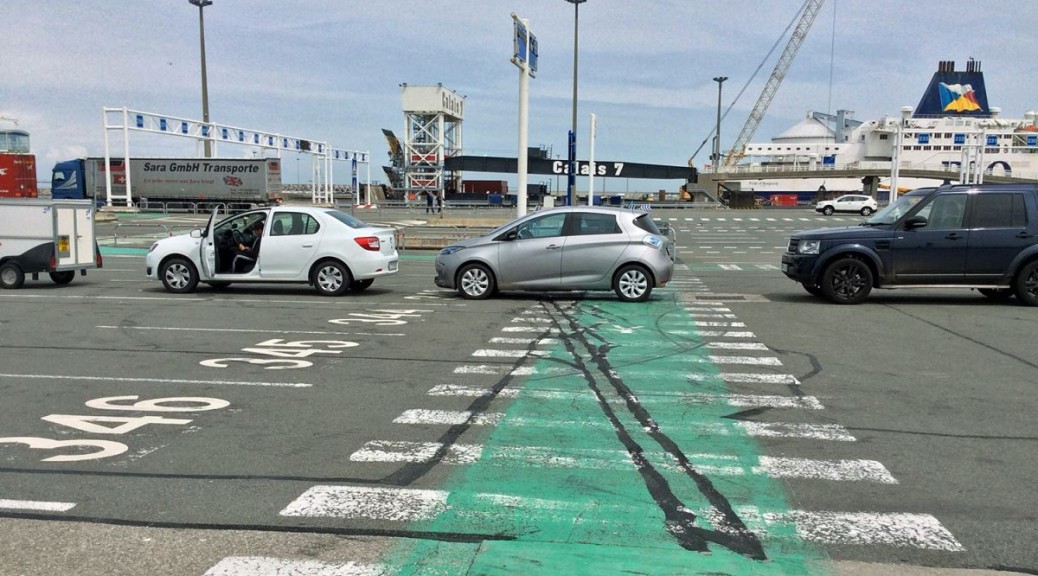
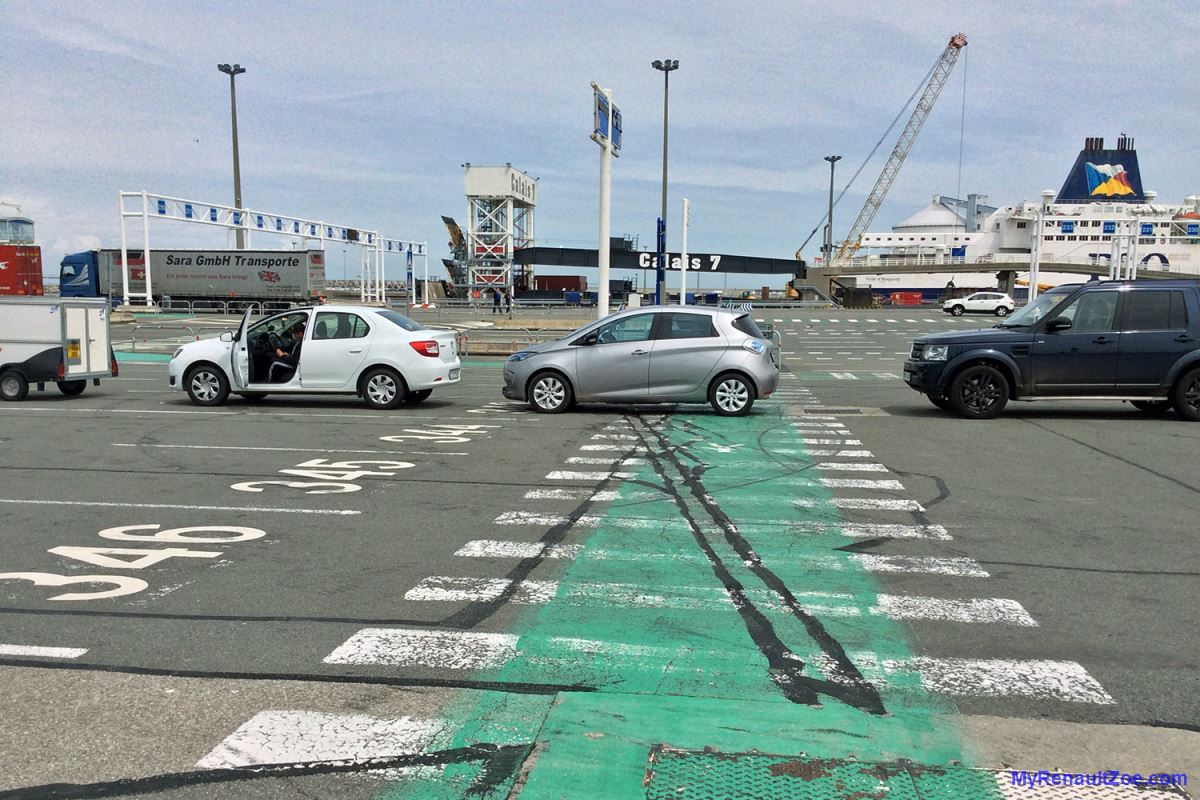
Waiting for the ferry (Image: Surya)

Two weeks ago I went on a road trip of about a week with my ZOE. It was kind of a last minute decision as a free time slot came available and stress levels at work were high. We had the ZOE for about a month by then so we did have some experience with the car, we had put about 2000km on the odometer. But a road trip is not something we had done yet. In fact I hadn’t traveled outside the range of the car a single time (I don’t normally need to).

To prepare I went to a public charger in Belgium to make sure the charge card I had for Belgium worked. I would have to charge once in Belgium, in De Panne, close to the border of France. I had also received an Ecotricity card, but I didn’t have any other charge cards for the UK and I had ran out of time to order any. They simply wouldn’t arrive in time. I phoned Trevor to talk about the feasibility of the trip with just an Ecotricity card. We agreed that if we didn’t divert from the Electric Highway too much, we should be fine.

The day before we left I got the great news that the ‘granny cable’ to charge from domestic sockets had arrived and I could pick it up. This added an extra charge option just in case, which increased my confidence.

To get to the Electric Highway would be about 60km from Dover, where the ferry would land. To get to the ferry in Calais would be about 60km from the charger in De Panne, so well within the range of the car if I didn’t do anything crazy. The De Panne charger itself is a 22kW unit about 100km from my house. So I had to charge for about an hour to be full enough to make it to the Ecotricity charger on the M2 in Medway. To be sure I bought a flex ticket for the ferry in case we’d run late. And we did. Not because of technical reasons, we just left too late.

The trip to De Panne went smooth, the charger was easily found and free and worked. The car was full in about 40 minutes, charging from a remaining 64km. The car had predicted more time but we also stopped charging at 99%. I noticed the car keeps on charging very fast up until then, and then it takes a very long time to finish that last percent. For the rest of the trip I would always cut off at 99%. It’s simply not worth the extra time.

For the trip to Calais we didn’t take the motorway but a parallel road with speeds of 70km/h and 90km/h, as proposed by the GPS when selecting eco-route. That is something else we would use for most of the trip as usually it isn’t that much slower but it can make a big difference on range.

Coming off the ferry, we entered the postal code for the M2 charger. We knew we could make it, as we had 60km to go and 90km of range left. Clearly not a problem, but the car thought otherwise, constantly proposing to add a charger along the route, sometimes multiple times in a single minute. A bit annoying.

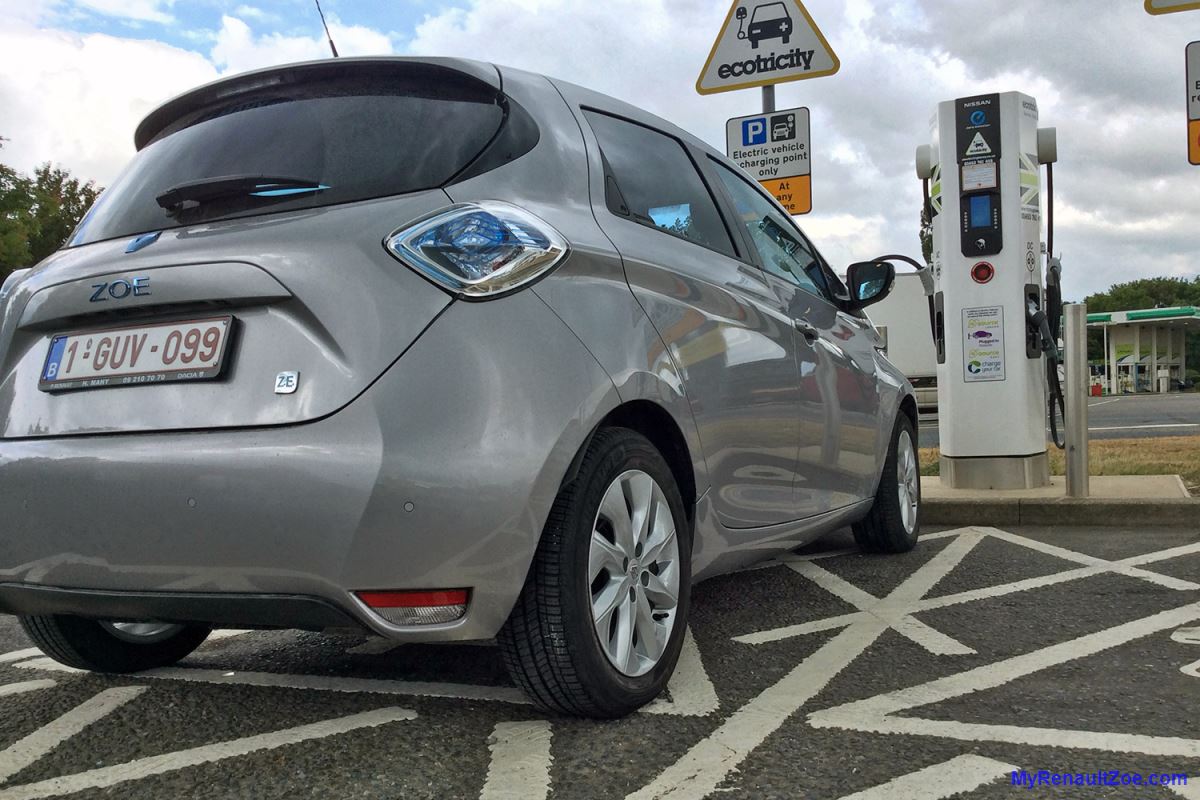
First charge of the trip (Image: Surya)

We arrived at the charger with 28km of range left. The charger on our side of the road was down, as indicated by the Ecotricity website, so that wasn’t a surprise. But there is a public bridge just past the services so going to the other side wasn’t a problem, and that charger worked fine. This was our very first quick charge, and man, that is indeed quick! The car was full (that is, 99%) in less than half an hour.

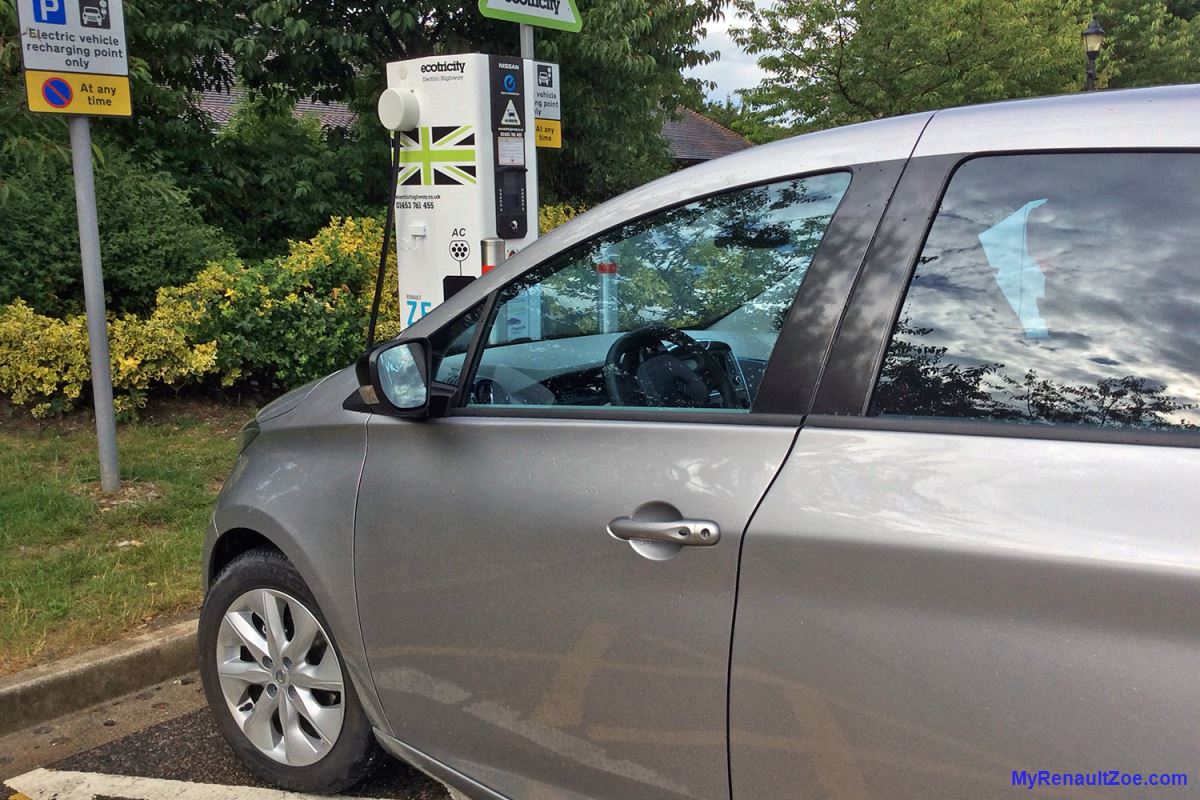
Charging at Clackett Lane (Image: Surya)

We did a second quick charge in Clacket Lane to take us to the Gatwick area where we stayed in a B&B for the night.

[Part 2]